
Are Woven & Roman Shades Worth It in French Valley & Wildomar?
Homeowners comparing woven shades in French Valley and Roman shade options often want clear, practical information before choosing a window treatment. This guide explains how these shades work, where they perform well, their limitations, cost factors, and maintenance needs, so buyers can evaluate suitability based on climate, room use, and budget.
Functional Differences Between Woven Shades and Roman Shades
Woven shades and Roman shades differ primarily in construction, fold behavior, and light control.
- Woven shades
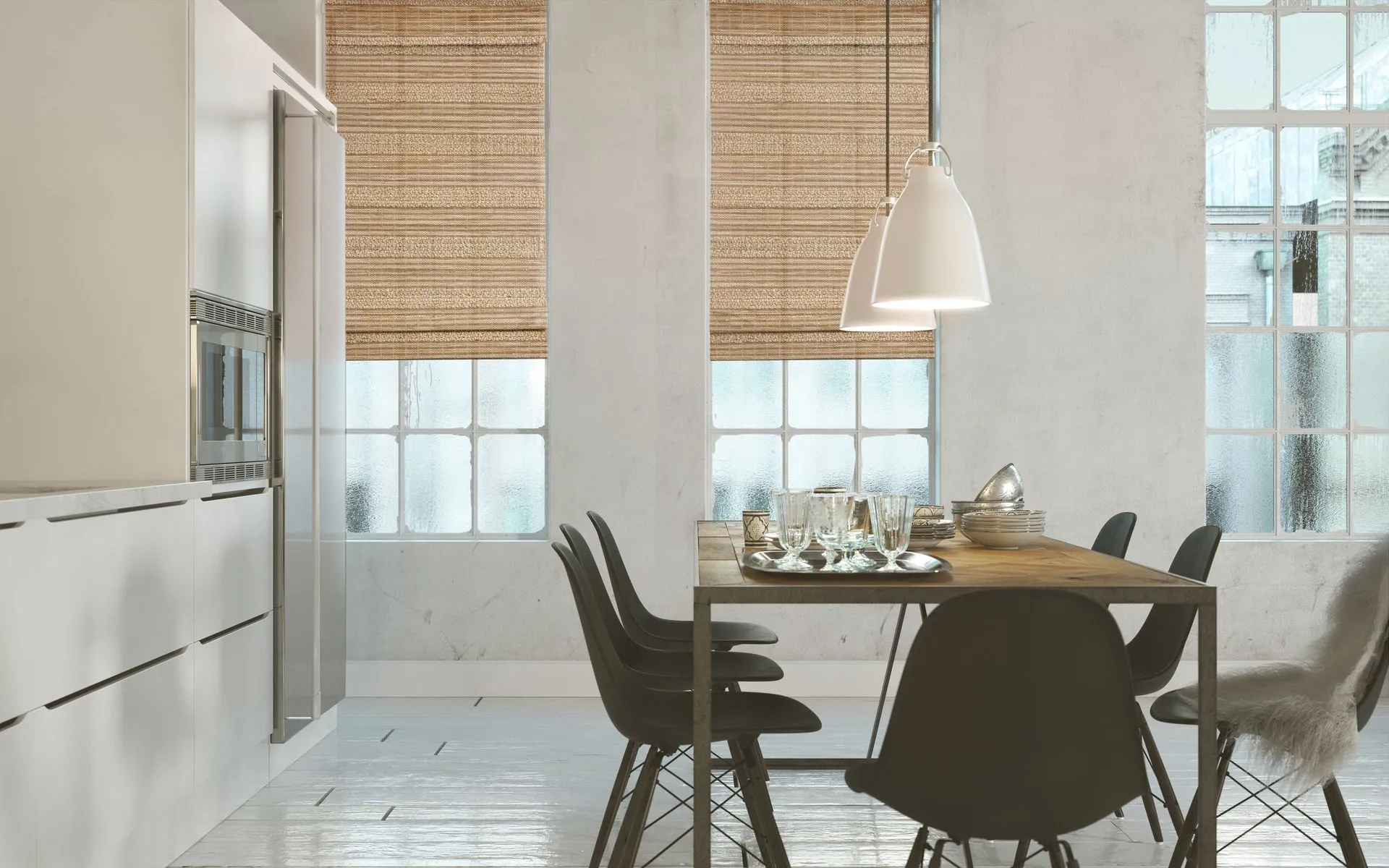
- Made from natural or blended materials like bamboo, reeds, grasses, or jute
- Built as layered weaves that roll or stack when raised
- Typically, provide filtered, textured light rather than full blackout
- Surface texture is visible and irregular by design
- Often paired with optional liners for privacy or room darkening
- Roman shades
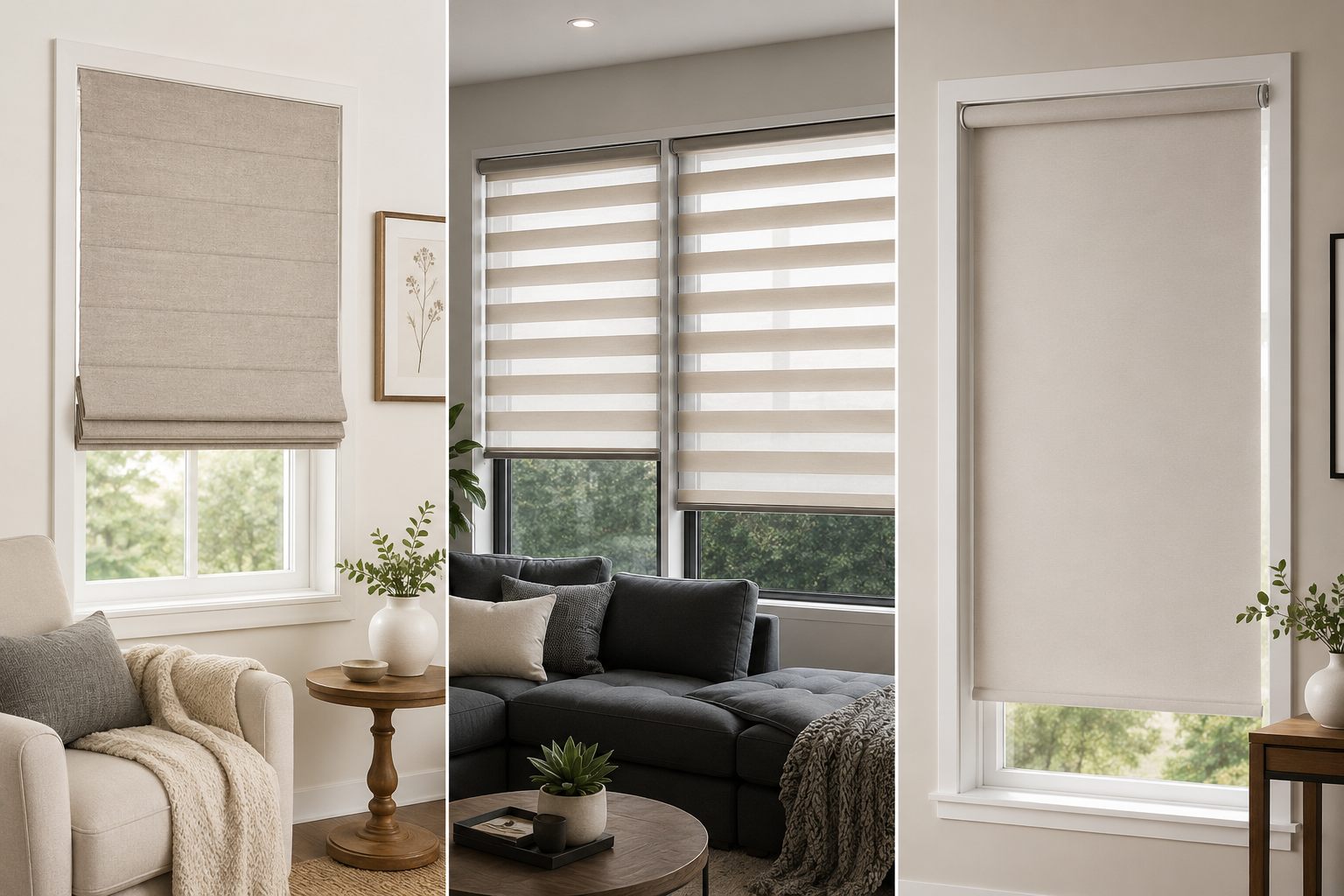
- Made from fabric panels that fold into horizontal pleats
- Available in flat, soft-fold, or hobbled styles
- Provide more predictable light control depending on fabric choice
- Offer a wider pattern and color selection
- Can be tailored to match upholstery or décor fabrics
The choice is less about which is better overall and more about which structure and material behavior fits the room’s lighting and design needs.
Climate and Sun Exposure Considerations in Inland Valley Areas
Window covering performance is affected by heat, dryness, and strong sunlight common in inland Southern California communities.
- High sun exposure increases:
- Fabric fading risk
- Material drying and brittleness
- UV damage to natural fibers
- Dry conditions can affect:
- Natural woven materials that may become more brittle over time
- Adhesives and stitching if low quality
- Heat gain through windows impacts:
- Room comfort
- Cooling costs
- Glare levels on screens and floors
Material behavior under the sun:
- Natural woven materials may show color variation and gradual aging
- Synthetic-blend woven shades resist UV better but lose some organic texture
- Roman shade fabrics with UV liners maintain color longer
- Light-colored fabrics reflect more heat than dark tones
Homes with west- or south-facing windows typically require liners or dual-layer solutions regardless of shade style.
Light Control and Privacy Performance by Shade Type
Light filtering and privacy vary significantly depending on construction and liner options.
- Woven shades
- Naturally light-filtering due to gaps in the weave
- Daytime privacy is moderate, not absolute
- Night privacy is limited without a liner
- Available liner upgrades:
- Privacy liner
- Room-darkening liner
- Blackout liner
- Texture creates soft, diffused daylight
- Roman shades
- Light control depends on fabric thickness and backing
- Privacy ranges from sheer to blackout
- More predictable coverage without visible gaps
- Better suited for:
- Bedrooms
- Street-facing rooms
- Bathrooms (with moisture-rated fabric)
In practical use, woven shades without liners are better for filtered light spaces, while roman shades in Wildomar offer more controlled privacy configurations.
Interior Design Compatibility and Visual Impact
Each shade style creates a different visual effect and suits different interior schemes.
- Woven shades
- Emphasize texture and organic appearance
- Work well with:
- Coastal interiors
- Farmhouse styles
- Neutral palettes
- Natural material themes
- Visual irregularities are normal
- Color range is typically limited to earth tones
- Roman shades
- Emphasize fabric pattern and color coordination
- Work well with:
- Traditional interiors
- Transitional designs
- Modern layered window treatments
- Can match:
- Drapery
- Cushions
- Upholstery
- Offer cleaner visual lines when lowered
Design selection should consider wall color, flooring tone, and furniture materials rather than shade style alone.
Installation and Fit Constraints That Affect Results
Proper measurement and mounting choice affect appearance and performance.
- Inside mount constraints
- Requires sufficient window depth
- Shows window frame edges
- Demands more precise measurement
- Reduces light gap coverage
- Outside mount constraints
- Covers more wall area
- Improves light blocking
- Hides uneven window frames
- Requires extra width and height overlap
- Woven shade fit issues
- Slight weave irregularity may affect edge alignment
- Material thickness may project further from the wall
- Roman shade fit issues
- Fabric stack height increases with thicker textiles
- Fold size varies by style
- Can obstruct the trim if not sized correctly
Improper mounting choice is one of the most common causes of dissatisfaction with shade performance.
Maintenance and Cleaning Requirements
Maintenance needs differ due to material and construction.
- Woven shades
- Dust collects in textured surfaces
- Typically cleaned by:
- Light vacuuming with brush attachment
- Dry dusting
- Spot cleaning is limited
- Moisture exposure can warp natural fibers
- Not ideal for high-humidity rooms unless treated
- Roman shades
- Fabric determines cleaning method
- Options include:
- Vacuuming
- Spot cleaning
- Professional cleaning for delicate fabrics
- Removable fabric models simplify maintenance
- Kitchen use requires stain-resistant fabrics
Maintenance expectations should match the room function and air quality conditions.
Cost Ranges and Value Factors
Costs vary based on material quality, size, and operating system.
- Primary cost drivers
- Window size
- Custom vs standard sizing
- Material grade
- Liner type
- Motorization
- Fabric brand or weave source
- Typical relative pricing
- Basic woven shades: moderate
- Premium natural woven materials: moderate to high
- Standard Roman shades: moderate
- Designer Roman fabrics: high
- Motorization impact
- Adds noticeable cost
- Improves usability on tall windows
- Reduces wear from manual handling
Lower initial cost does not always equal better long-term value if materials degrade faster under sun exposure.
Conclusion
Woven and Roman shades serve different functional and design purposes, and their value depends on light control needs, sun exposure, maintenance tolerance, and interior style. Material behavior and liner choices matter more than appearance alone. Homeowners comparing options locally often review these factors when evaluating solutions from providers such as C&C Shutters and Window Coverings.
Frequently Asked Questions
Are woven shades good for blocking heat?
They reduce glare and some heat, but significant heat blocking requires a thermal or blackout liner.
Do Roman shades provide full privacy at night?
Yes, if made with privacy or blackout fabric; sheer fabrics do not provide full night privacy.
Do woven shades fade in strong sunlight?
Natural fibers can fade over time under strong UV exposure, especially without liners.
Are Roman shades harder to clean than blinds?
Fabric shades generally require more careful cleaning than hard-surface blinds.
Can woven shades be used in bathrooms?
Only if made from moisture-resistant synthetic materials; natural fibers are not recommended.
Do Roman shades work with motorized systems?
Yes, many Roman shade systems support motorization for large or tall windows.